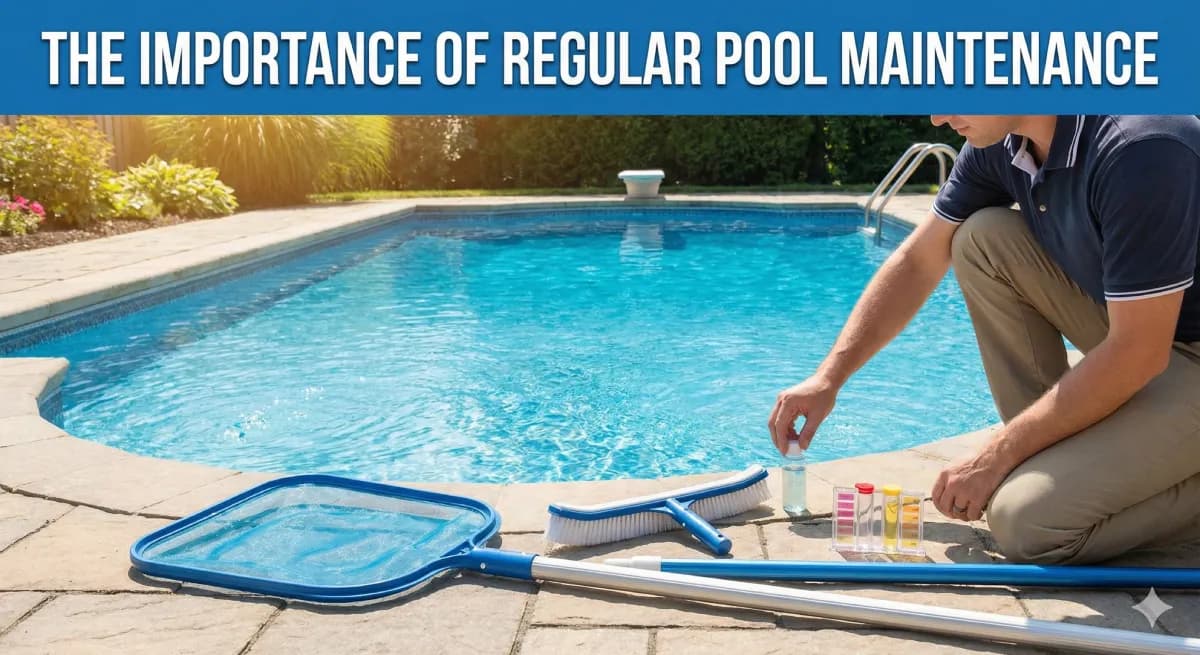
A pool is one of the most significant investments you can make in your home. Beyond the initial construction costs, your pool represents years of family memories, weekend relaxation, and backyard entertainment. Regular maintenance is the key to protecting this investment and ensuring your pool remains a source of joy rather than a constant headache.
In this comprehensive guide, we'll explore why consistent pool maintenance matters and how it can save you thousands of dollars in the long run.
Preventing Equipment Failure
Your pool's mechanical systems work hard day and night to keep your water clean and circulating. Pumps, filters, heaters, and chlorinators are all critical components that require regular attention.
Pump Maintenance
The pool pump is the heart of your circulation system. Without proper care, pumps can overheat, lose prime, or burn out entirely—often at the worst possible time. Here's what regular pump maintenance includes:
- Checking the strainer basket weekly to remove debris that can restrict flow
- Inspecting the pump lid o-ring for cracks or deterioration
- Listening for unusual sounds like grinding or humming that indicate bearing wear
- Monitoring water flow to ensure consistent circulation
A well-maintained pump can last 8-12 years, while a neglected one might fail in just 3-5 years. Given that replacement pumps cost anywhere from $500 to $2,000 installed, the math speaks for itself.
Filter Care
Whether you have a sand, cartridge, or DE filter, regular cleaning is essential. A dirty filter forces your pump to work harder, increasing energy costs and accelerating wear. Most filters should be cleaned or backwashed when pressure rises 8-10 PSI above the clean starting pressure.
Chemical Balance: More Important Than You Think
Properly balanced water isn't just about comfort—it's about protecting your pool's surface and the people who swim in it. Unbalanced water can cause serious problems in just a few weeks.
The Dangers of Imbalanced Water
Low pH (acidic water):
- Corrodes metal components, including ladders, rails, and heat exchangers
- Etches plaster and concrete surfaces
- Causes eye and skin irritation
- Damages pump seals and gaskets
High pH (basic water):
- Leads to calcium scaling on tiles and equipment
- Reduces chlorine effectiveness by up to 80%
- Creates cloudy water that won't clear
- Clogs filters and reduces circulation
Key Levels to Monitor
For optimal water balance, test your pool at least twice weekly and maintain these ranges:
| Parameter | Ideal Range | | ---------------- | ------------- | | pH | 7.4 - 7.6 | | Chlorine | 1 - 3 ppm | | Alkalinity | 80 - 120 ppm | | Calcium Hardness | 200 - 400 ppm | | Cyanuric Acid | 30 - 50 ppm |
Investing in a quality test kit or digital tester pays dividends in water clarity and equipment longevity.
Detecting Issues Early: The Hidden Value of Routine Maintenance
Perhaps the most valuable aspect of regular pool maintenance is the opportunity to catch problems before they escalate. During routine cleaning and inspection, trained eyes can spot warning signs that most homeowners would miss.
What Regular Maintenance Reveals
- Hairline cracks in plaster or concrete before they become structural failures
- Small leaks at fittings, lights, or skimmers before they cause soil erosion
- Tile grout deterioration before water infiltrates behind the tiles
- Early algae formation before it becomes a full bloom requiring expensive treatment
- Pump or motor issues from subtle changes in sound or performance
A professional pool technician performing weekly maintenance might notice that your pump sounds slightly different, investigate, and find a failing bearing. Replacing a bearing might cost $150-300. Waiting until the pump seizes completely? That's $800-2,000 for a new pump, plus potential damage to your plumbing from running dry.
The Cost of Neglect
Consider this real-world scenario: A small leak at a return fitting loses 1/4 inch of water per day. That's approximately 150 gallons weekly or 7,800 gallons annually. Beyond the water bill, you're also losing chemicals, which need constant replenishment. But the hidden cost is soil erosion around your pool structure, which can eventually lead to deck settling, cracking, or even pool shell damage.
Early detection could have fixed this with a $50 gasket and 30 minutes of work.
Curb Appeal and Property Value
A sparkling clean pool is more than just pretty—it's a significant contributor to your home's overall value and appeal.
First Impressions Matter
If you're considering selling your home, the condition of your pool is often one of the first things potential buyers notice. A crystal-clear pool with well-maintained equipment signals that the entire property has been cared for. Conversely, a green, neglected pool raises immediate red flags about what else might be wrong with the home.
The Numbers Don't Lie
According to real estate studies, a well-maintained pool can add 7-15% to your property value in warm climates. However, a pool in poor condition can actually detract from value, as buyers factor in the cost of repairs or renovations.
Regular maintenance costs approximately $100-200 per month professionally, or significantly less if you handle it yourself. Compare that to the $10,000-30,000 cost of a pool renovation, and the investment in maintenance becomes clear.
Creating a Maintenance Schedule
Consistency is key to effective pool maintenance. Here's a recommended schedule to keep your pool in peak condition:
Daily:
- Skim surface debris
- Check water level
- Empty skimmer baskets
Weekly:
- Test and balance chemicals
- Brush walls and tile line
- Vacuum pool floor
- Clean pump strainer basket
- Inspect equipment for leaks or unusual sounds
Monthly:
- Deep clean filters
- Check water chemistry with a professional-grade test
- Inspect pool light seals
- Examine deck and coping for cracks
Annually:
- Professional equipment inspection
- Leak detection test if water loss is suspected
- Acid wash or surface treatment as needed
- Complete chemical system tune-up
The Bottom Line
Regular pool maintenance isn't an expense—it's an investment that pays returns in equipment longevity, lower repair costs, consistent water quality, and preserved property value. Whether you handle maintenance yourself or hire professionals like Pool Leak Pro, the key is consistency.
Don't wait until you have a problem. Establish a maintenance routine now, and enjoy your pool worry-free for years to come.
Need help with pool maintenance or suspect you might have a leak? Contact Pool Leak Pro today for a professional assessment.
About Pool Leak Pro
Pool Leak Pro is a leading provider of professional pool leak detection and repair services. Our team of experts is dedicated to helping homeowners maintain their pools and protect their investments.
Work With Us