
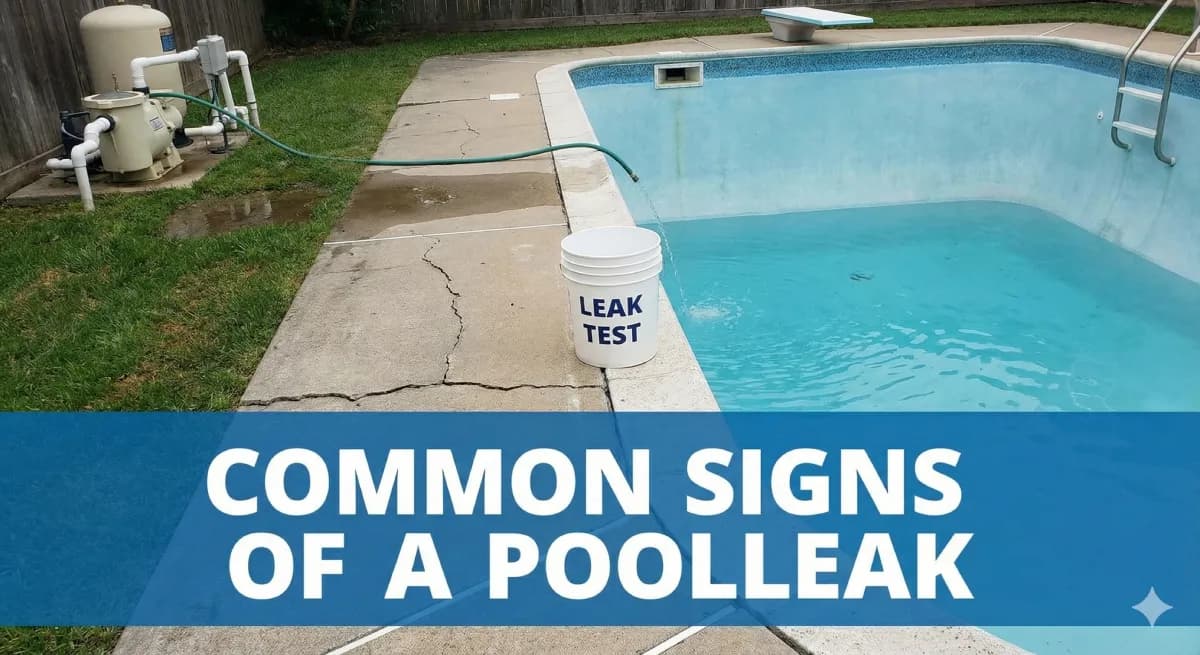
Pool leaks are more common than most homeowners realize, and they can be a source of significant frustration and expense. Not only do they waste thousands of gallons of water annually, but they can also cause extensive damage to your pool structure, deck, and surrounding landscape. The good news? Identifying a leak early can save you thousands of dollars in repairs and prevent catastrophic structural damage.
In this comprehensive guide, we'll walk you through the most common signs of a pool leak, help you distinguish between normal water loss and a genuine leak, and explain when it's time to call in the professionals.
Understanding Normal Water Loss vs. Leaks
Before we dive into leak signs, it's important to understand that all pools lose some water naturally. Evaporation, splash-out from swimming, and backwash waste are all normal sources of water loss.
Normal Evaporation Rates
Evaporation varies significantly based on your location, weather conditions, and pool features:
- Average evaporation: 1/8 to 1/4 inch per day under normal conditions
- Hot, dry, windy conditions: Up to 1/2 inch per day
- Pools with water features: 20-50% more evaporation due to increased surface exposure
- Heated pools: Significantly higher evaporation, especially with temperature differentials
The Bucket Test
The simplest way to determine if you have a leak is the bucket test:
- Fill a bucket with pool water and mark the water level inside
- Place the bucket on the pool steps (partially submerged)
- Mark the pool water level on the outside of the bucket
- Wait 24-48 hours without using the pool
- Compare the two levels
If the pool water dropped more than the bucket water, you likely have a leak. This test accounts for evaporation since both water sources are exposed to the same conditions.
Sign #1: Water Level Drops More Than Normal
The most obvious sign of a pool leak is excessive water loss. While evaporation accounts for some loss, there are clear indicators that you're dealing with something more serious.
Red Flags to Watch For
- Losing more than 1/4 inch per day consistently over a week
- Adding water more than once per week to maintain proper levels
- Water loss that doesn't change regardless of weather conditions
- Autofill running constantly if you have an automatic leveler
Calculating Your Water Loss
Here's a quick way to understand the impact: A typical residential pool loses about 180 gallons per inch of water level. If you're losing 1/2 inch per day—twice the normal rate—that's an extra 1,260 gallons per week, or approximately 65,000 gallons annually. At current water rates, that could cost $500-1,000 yearly in water alone, not counting the chemicals you're also losing.
Sign #2: Cracks in the Pool Shell
Visible cracks in your pool's surface are obvious warning signs that should never be ignored. Even seemingly minor cracks can allow significant water loss and lead to serious structural problems over time.
Types of Cracks
Surface Cracks (Crazing): These are small, spider-web-like cracks in the plaster that typically don't penetrate to the shell. While unsightly, they usually don't cause leaks. However, they can worsen over time and should be monitored.
Structural Cracks: These are deeper cracks that extend through the plaster and into the concrete or gunite shell. They're often longer, wider, and may show signs of movement (edges at different heights). Structural cracks almost always leak and require professional repair.
Expansion Cracks: Usually occurring at stress points like corners, skimmers, or where the pool meets the deck, these cracks result from ground movement or temperature changes. They often begin small but can expand rapidly if not addressed.
What to Look For
- Cracks longer than 6 inches
- Cracks that are widening over time (mark them with tape to track)
- Cracks with staining around them (indicating water flow)
- Cracks near fittings, lights, or skimmers
- Any crack that extends below the waterline
Sign #3: Persistent Wet Spots Around Your Pool
One of the most telling signs of an underground leak is unexplained moisture in the areas surrounding your pool. These signs are particularly concerning because they indicate the leak is affecting the soil and could be causing erosion or structural damage.
What Wet Spots Mean
When a pool has an underground plumbing leak, water escapes into the surrounding soil. This water has to go somewhere, and it often surfaces in low-lying areas or follows the path of least resistance. The result is persistent wet spots that never seem to dry, even during hot, dry weather.
Where to Look
Around the deck:
- Soggy areas between deck sections
- Joints that are constantly wet
- Areas where puddles form even without rain
In the yard:
- Unusually lush grass patches near the pool
- Consistently soft or muddy areas
- Unexplained standing water
Near equipment:
- Wet soil around the pump or filter area
- Moisture at pipe connections
- Rust or corrosion on metal components
The Hidden Danger
Underground leaks don't just waste water—they wash away soil. Over time, this erosion can undermine your deck, causing it to settle, crack, or even collapse. In severe cases, the pool shell itself can shift, leading to structural damage that costs tens of thousands of dollars to repair.
Sign #4: Unexplained Algae Growth
If you're constantly battling algae despite maintaining proper chemical levels, a leak could be the culprit. Leaks disrupt your pool's chemistry in multiple ways.
How Leaks Cause Algae Problems
Dilution effect: Fresh water entering the pool dilutes your sanitizer, reducing its effectiveness. If you have an autofill, you might not notice the water loss, but your chlorine levels will be chronically low.
Contamination: Depending on the leak location, outside water, soil, and organic matter can enter your pool, introducing nutrients that algae love.
Chemical imbalance: As water escapes and is replaced, stabilizer (cyanuric acid) and other chemicals are lost, making it harder to maintain proper balance.
Signs Your Algae Problem Might Be Leak-Related
- Algae returns within days of treatment
- Chemical levels won't stay stable despite proper dosing
- Different areas of the pool have different clarity
- You're using significantly more chemicals than neighbors with similar pools
Sign #5: Air Bubbles in the Return Jets
If you notice a steady stream of air bubbles coming from your return jets, this could indicate a suction-side leak in your plumbing. Air entrainment typically means there's a breach somewhere between the skimmer or main drain and the pump.
Common Causes
- Cracked pump lid
- Loose or deteriorated pump lid o-ring
- Crack in the suction pipe
- Loose fitting at the pump or skimmer
- Low water level exposing the skimmer weir
Why This Matters
Beyond indicating a potential leak, air in your system can cause serious damage. Air-starved pumps run hot and can burn out prematurely. Persistent air bubbles also reduce filtration efficiency and can damage DE filter grids or cartridge elements.
Sign #6: Equipment Running Longer
If your pump seems to run constantly to maintain pressure, or your heater struggles to reach temperature, a leak could be the reason.
The Connection
Leaks increase your system's workload:
- Pumps: Work harder to maintain flow if there's air in the lines
- Heaters: Can't keep up when constantly heating fresh, cold makeup water
- Autofill: Runs frequently to replace lost water
- Chemical feeders: Operate more to maintain levels in diluted water
What to Check
- Monitor pump run times and pressure
- Track heater cycles and temperature stability
- Note how often your autofill activates
- Keep records of chemical usage over time
Sign #7: Deck and Coping Issues
Your pool deck and coping can reveal clues about what's happening underground. Subtle changes in these areas often indicate water-related soil problems.
Warning Signs
- Deck settling or sinking: Areas near the pool dropping relative to others
- Lifting or heaving: Sections of deck rising, often opposite to settling areas
- Cracks in the deck: New or widening cracks, especially those pointing toward the pool
- Loose coping: Coping stones that were previously secure becoming unstable
- Grout or mortar failure: Constant need to re-grout tile or reset coping
These symptoms suggest that soil beneath your deck is either being washed away or is expanding due to water saturation—both indicating a leak.
When to Call a Professional
While some leak signs are obvious, others are subtle or could have alternative explanations. Here's when you should definitely call in expert help:
Immediate Professional Attention Needed
- Water loss exceeds 1/2 inch per day consistently
- Structural cracks are visible and growing
- Persistent wet spots around the pool area
- Deck settling or major cracking
- Unable to maintain chemical balance despite proper dosing
The Detection Process
At Pool Leak Pro, we use advanced electronic leak detection technology that can pinpoint leaks without destructive testing. Our process typically includes:
- Initial assessment: Visual inspection and water loss evaluation
- Pressure testing: Isolating plumbing lines to identify pipe leaks
- Electronic detection: Using specialized equipment to find leaks in the shell
- Dye testing: Confirming leak locations with precision
- Detailed report: Providing you with clear findings and repair options
The Cost of Waiting
Many homeowners put off leak detection, hoping the problem will resolve itself or isn't serious. Unfortunately, pool leaks only get worse over time. A small leak today could become a major structural issue tomorrow. Early detection and repair almost always cost less than emergency remediation.
Prevention Tips
While not all leaks are preventable, you can reduce your risk:
- Maintain proper water chemistry to protect surfaces and equipment
- Address minor cracks and wear before they become major issues
- Keep trees and large shrubs at safe distances from the pool
- Ensure proper drainage around the pool area
- Have your pool professionally inspected every 1-2 years
The Bottom Line
Pool leaks are serious but manageable problems when caught early. By knowing the signs and acting promptly, you can protect your investment and avoid costly repairs.
If you've noticed any of the warning signs we've discussed, don't wait. Contact Pool Leak Pro today for a professional leak detection assessment. Our experienced team will find the source of your problem and provide effective, lasting repairs.
Suspect a leak? Pool Leak Pro offers comprehensive leak detection services throughout the Bay Area. Call us today at (669) 800-0408 or visit our contact page to schedule an inspection.
About Pool Leak Pro
Pool Leak Pro is a leading provider of professional pool leak detection and repair services. Our team of experts is dedicated to helping homeowners maintain their pools and protect their investments.
Work With Us